My Learning Philosophy
Beliefs About Learning in General
I view learning as a continual and evolving journey that develops through personal experiences and the quest for knowledge alongside natural curiosity. According to Harapnuik (2021), learning should be student-centered, with learners actively engaging in their education. Learning extends beyond gathering data to include understanding concepts, which are applied and evolved to generate valuable experiences. Students learn through active participation in their educational journey by questioning concepts and relating them to personal experiences. Intrinsic motivation should lead learning while collaboration provides support, and a growth mindset allows it to develop.

Beliefs About the Relationship Between Teaching and Learning
The connection between teaching and learning forms a symbiotic relationship, demonstrating that the outdated model of teachers as exclusive knowledge holders no longer applies. I approach teaching as a learning facilitator who helps students find knowledge through exploration instead of giving them fixed answers. This fits with Vygotsky’s (1978) Social Constructivism framework that identifies social interaction and guided learning as essential elements for gaining knowledge. Research shows students reach optimal learning outcomes when they take responsibility for their learning journey by exploring new subjects and tracking their progress. Student-focused teaching methods establish learning environments that enable both deep understanding of knowledge and permanent retention of educational material.

Beliefs About Myself as a Learner
I approach life with a lifelong learning perspective which allows me to willingly tackle challenges and seek continuous opportunities for growth. The way I teach and inspire students results from my educational experiences and mental approach. My learning process demonstrates curiosity alongside resilience and adaptability while showing that setbacks serve as moments for reflection and growth. I want my students to adopt these values by creating a learning space that supports inquiry and creative thinking. Dewey’s (1938) Experiential Learning theory reinforces this by emphasizing the importance of real-world applications in education.

Learning Philosophy vs.Teaching Philosophy
A learning philosophy examines how individuals absorb and understand knowledge, while a teaching philosophy examines the instructional methods educators use to support student learning. My learning philosophy puts the student’s engagement with content at the forefront of the learning process. My teaching philosophy defines my methods for delivering instruction alongside my classroom management strategies. The ability to distinguish between these elements enables me to build educational experiences that extend past simple content presentation. Piaget (1970) supports this notion by explaining that learning is an active process shaped by developmental stages and personal experiences.
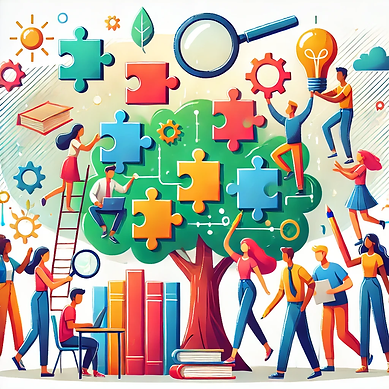
My preferred learning theory is Constructivism because it aligns with my belief that knowledge emerges through active construction instead of passive reception. Students' Educational success comes from allowing them to expand prior learning alongside experiential exploration and collaborative social interaction, which deepens their comprehension. The constructivist theorist Jean Piaget explained that active exploration combined with cognitive development leads to learning. Lev Vygotsky’s Social Constructivism demonstrates how learning benefits from social interaction and scaffolding techniques.
My Learning Theory Alignment
My core teaching approach is Constructivist, but I use Cognitivist strategies to analyze information processing and behaviorist techniques to provide structured feedback and practice for positive learning behavior reinforcement. My learning philosophy and teaching practices develop from integrating these educational approaches.
According to Jean Piaget's constructivist learning, it happens through direct experience and the developmental cognitive stages.
Connection to My Innovation Plan
The principles of my learning philosophy guide my innovation strategy, “School Sphere,” which focuses on enhancing communication links between parents, students, and educators. Through the creation of a constructivist learning space, I plan to develop a digital platform that facilitates collaborative education and student-led exploration with practical knowledge application. The educational platform will boost student involvement through discussion forums and interactive resources and offer personalized learning paths which demonstrate my commitment to student-centered technology-based education. Harapnuik’s (2021) work underscores the importance of students taking control over their learning process which supports the requirement for a flexible and interactive learning environment. I advocate for digital learning programs which empower both students and educators to manage their educational journeys. The traditional school communication model will be replaced by a learner-centered platform to establish an interactive system that enhances student learning outcomes.

My learning philosophy is a dynamic record that captures my continuous development as an educator and a learner. I prioritize student agency combined with meaningful engagement and technology-enhanced learning to establish learning environments that empower students to become lifelong learners. As I proceed with developing my innovation plan to transform educational communication and learning experiences, I will incorporate these fundamental principles into it.

